
Why a Home Gym Can Change the Way You Exercise
A home gym does not have to look like a polished fitness studio or a room filled with expensive machines. For most people, the real value of training at home is much simpler. It removes friction. There is no commute, no waiting for equipment, no awkward feeling of being watched, and no need to rearrange your whole day around a workout.
That convenience matters more than people often admit. Fitness is not only about motivation. It is about making exercise easy enough to repeat. When your workout space is a few steps away, even a short session feels possible. Ten minutes before breakfast, twenty minutes after work, a gentle stretch before bed; these small windows become easier to use.
Understanding home gym setup essentials is really about building a space that supports consistency. It should fit your goals, your budget, your available space, and the kind of movement you actually enjoy.
Start With the Space You Already Have
Many people delay creating a home gym because they imagine they need a spare room. In reality, a corner of a bedroom, a section of the living room, a garage wall, or even a hallway can work. The best space is not always the biggest one. It is the space you can access easily and keep reasonably clear.
Start by looking at how you move. If you enjoy yoga, stretching, or bodyweight training, you need enough floor space to lie down and extend your arms. If strength training is your focus, you need room to lift safely without hitting furniture. If you plan to jump, step, or do cardio intervals, ceiling height and flooring become more important.
A good home gym should feel inviting, not squeezed into chaos. Even a small area can work well if it is clean, open, and easy to reset after each session.
Flooring Makes a Bigger Difference Than You Think
Flooring is one of the most overlooked parts of a home workout space. Hard tile can feel harsh on joints. Slippery floors can make lunges or planks uncomfortable. Carpet may work for light stretching, but it can be unstable for strength training or quick movements.
A quality exercise mat is often the easiest starting point. It gives your body a defined workout area and adds comfort for floor exercises. For heavier training, thicker rubber flooring or interlocking foam tiles can protect both your joints and the floor underneath. This matters especially if you use dumbbells, kettlebells, or other weights.
Good flooring also helps create a mental boundary. Once the mat goes down, the space feels like a training area. That small signal can make it easier to begin.
Choose Equipment Based on Goals, Not Trends
The internet can make home gym shopping feel endless. There is always another tool promising better results, faster progress, or a more exciting routine. But useful equipment is usually simple. It should match your fitness goals and be easy enough to use regularly.
For general fitness, a mat, resistance bands, adjustable dumbbells, and a jump rope can cover a surprising amount of training. For strength, dumbbells, kettlebells, a bench, and a pull-up bar may be more useful. For mobility, yoga blocks, a foam roller, and stretching straps can help. For cardio, space to move may be enough, though some people prefer a treadmill, stationary bike, or rowing machine.
The key is to avoid buying equipment for a version of yourself that does not exist yet. If you are just beginning, start small. Add items as your routine becomes clearer. A simple setup used three times a week is better than an impressive setup that becomes storage.
Strength Training Essentials for Home Workouts
Strength training at home works best when your equipment gives you variety without taking over the room. Dumbbells are a strong choice because they can be used for squats, presses, rows, lunges, curls, deadlifts, and core exercises. Adjustable dumbbells save space, while fixed dumbbells are easier to grab quickly.
Resistance bands are another excellent option. They are affordable, portable, and useful for warm-ups, rehab-style movements, glute work, rows, presses, and stretching. Bands are also gentle on joints, which makes them helpful for beginners and older adults.
A sturdy bench can expand your routine, but it is not required at the start. You can still do floor presses, split squats, bridges, push-ups, and core exercises without one. If you do add a bench, make sure it is stable and fits your space comfortably.
Cardio Options Without a Full Machine
Cardio is where many people assume they need large equipment. A treadmill or bike can be useful, but they are not the only path. Bodyweight cardio can be done with almost no gear. Marching, step-ups, jumping jacks, mountain climbers, shadow boxing, high knees, and low-impact intervals can raise your heart rate quickly.
If you live in an apartment or shared space, low-impact cardio may be more practical than jumping exercises. Step touches, squat reaches, standing knee drives, and controlled fast-paced movements can still be effective without making much noise.
For those who enjoy machines, choose carefully. A cardio machine should match your habits, not your fantasy routine. If you hate running, a treadmill may become a clothes rack. If cycling feels natural, a bike might be a better fit. Comfort and enjoyment matter because cardio depends heavily on repetition.
Storage Keeps the Space Usable
A home gym can quickly become messy if equipment has no place to go. Clutter makes workouts feel harder to start. You may spend more time moving things around than actually exercising.
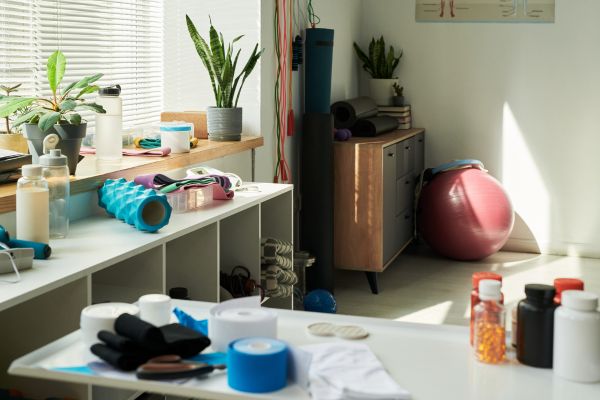
Simple storage can solve this. A basket can hold bands, straps, and small accessories. A low shelf can store dumbbells. Wall hooks can keep jump ropes, towels, or resistance bands off the floor. If space is tight, choose equipment that stacks, folds, or slides under furniture.
The goal is not perfection. The goal is readiness. When your workout area is easy to set up and easy to clean, you are more likely to use it.
Lighting, Airflow, and Atmosphere Matter
A home gym is not only about equipment. The environment affects your energy. Poor lighting can make a space feel dull. Stale air can make workouts uncomfortable. A crowded room can make movement feel restricted.
Natural light is ideal, but any bright, clean lighting can help. A fan or open window can improve airflow. A small speaker, timer, or workout playlist can make the space feel more active. Some people like a mirror for checking form, while others find it distracting. Choose what helps you feel focused rather than self-conscious.
Atmosphere should support movement. It does not need to look perfect for social media. It just needs to feel like a place where your body is welcome.
Safety Should Come Before Intensity
Safety is one of the most important home gym setup essentials because there is no trainer walking around to notice poor form or unstable equipment. Make sure weights are stored securely, mats do not slide, and the floor is clear before you begin. If you use a pull-up bar, bench, rack, or heavy machine, check stability carefully.
Leave enough room around you for full movements. A rushed lunge near a table corner or a dumbbell press under a low shelf is asking for trouble. It also helps to learn basic form before increasing weight or speed. Controlled movement builds better progress than careless intensity.
Warm-ups are part of safety too. A few minutes of joint circles, light squats, arm swings, or marching can prepare the body and reduce stiffness.
Build a Routine Around Your Setup
Once the space is ready, the next challenge is using it consistently. A good routine should match your equipment and your schedule. If you only have twenty minutes, design workouts that fit twenty minutes. If mornings are busy, avoid pretending you will train at sunrise every day.
A balanced home routine usually includes strength, cardio, mobility, and rest. You might train strength three days a week, do light cardio two days, and stretch in the evenings. Or you might prefer shorter daily sessions. The exact plan matters less than the habit.
Keep your workouts visible and simple. When you know what you are doing before you start, you waste less energy deciding. That makes it easier to show up, especially on days when motivation is thin.
Conclusion
Home gym setup essentials are not about filling a room with every piece of fitness equipment available. They are about creating a practical space that makes movement easier, safer, and more consistent. A mat, a few versatile tools, good flooring, simple storage, and enough room to move can be more valuable than a complicated setup.
The best home gym is the one that fits your real life. It should support your goals without adding pressure or clutter. When your workout space feels accessible and comfortable, exercise becomes less of a special event and more of a normal part of the day. That is where lasting fitness begins.